Navigation and radar · 12 min read · Updated 2026-09-01
Marine autopilot setup for the Australian east coast
An autopilot is a hydraulic or mechanical slave with a heading sensor. East-coast work — bars, shipping and long northerly hops — punishes a unit that was sized from a brochure.
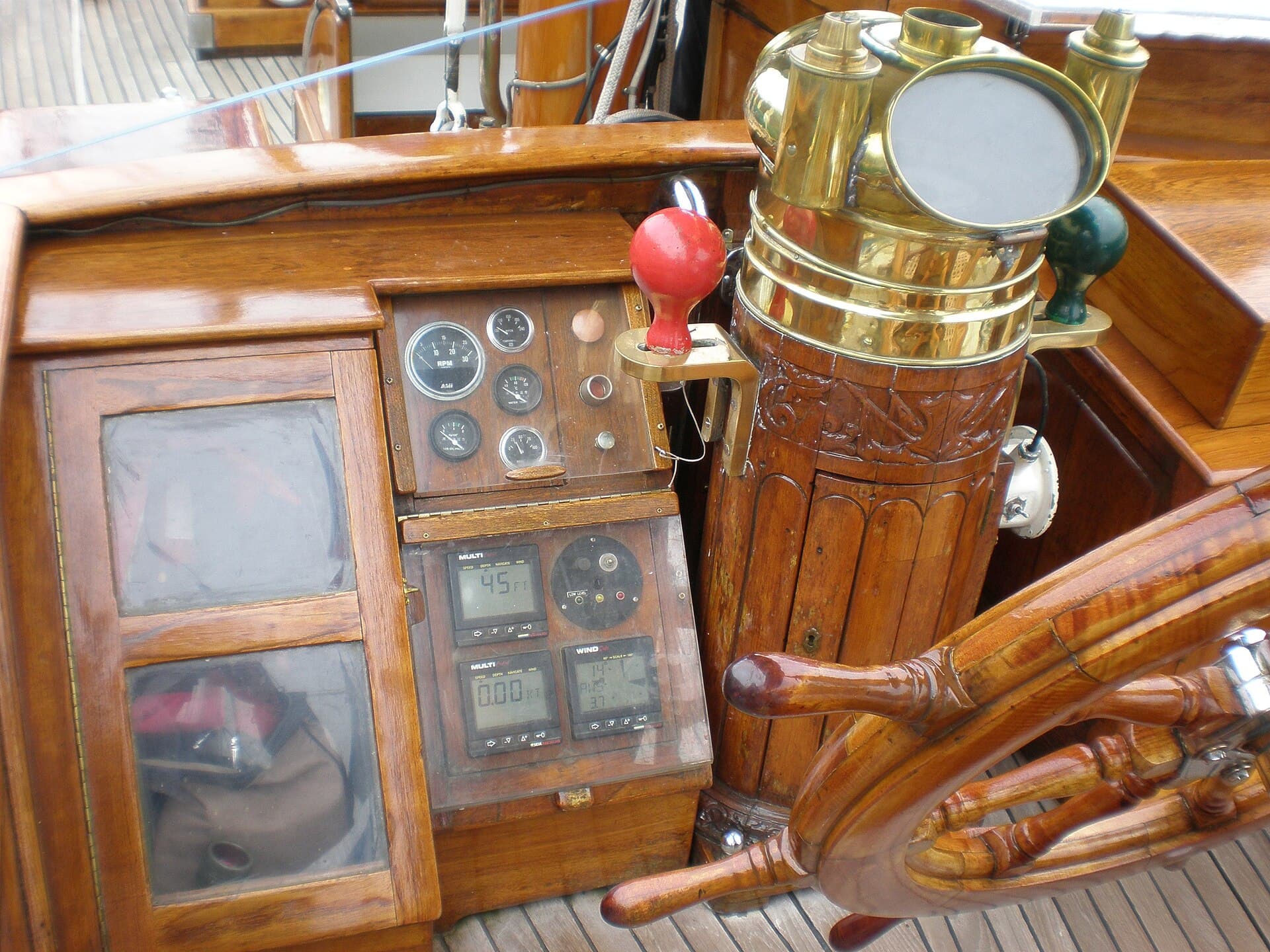
Photo: HMCS Oriole steering wheel, readouts and compass by BrokenSphere. Licensed under CC BY-SA 3.0. Source on Wikimedia Commons. Also listed on the AM Wholesale image credits page.
East-coast Australian passages are long, sunny and interrupted by bars, shipping and the odd southerly that turns a “set and forget” run into a gybe. Autopilots earn their keep on the hops — Gold Coast to the Wide Bay, the Fraser inside, Mackay to the Whitsundays — and they embarrass themselves when the drive was sized for a lighter hull or the heading sensor sits next to a speaker.
The old AM Wholesale list treated autopilots as part of the navigation desk, next to plotters and instruments. That is still the right shelf.
Size the drive, not the display
A pretty control head on an undersized ram will hunt, overheat and then fail on the first lumpy night. The computer and the drive (linear ram, rotary, or hydraulic pump) must match displacement, rudder torque and the speed you actually cruise. Manufacturers publish tables. Use the next size up if the boat is heavy, has a dirty bottom, or tows a tender.
Sailboats need a clutch and a ram that can be overpowered by hand. Power boats need a hydraulic story that does not steal the only pump the steering has.
Heading is the product
A fluxgate or satellite compass, mounted away from engines, winches and speakers, is the difference between a straight wake and a sine wave. Calibrate it on a clear, open stretch — not in a steel marina. Then confirm the MFD and the autopilot agree on the same heading sentence over NMEA 2000.
GPS course-over-ground is a backup, not a compass.
What “east coast” actually asks of the unit
- Bars and inlets: you will hand-steer. The autopilot’s job is the miles either side.
- Shipping: pair the computer with AIS and a plotter that can send a heading-aware route, then still keep a watch.
- Trades and northerlies: wind instruments that talk to a sailing autopilot are worth more than another inch of glass. See the electronics hub.
- Power: clutches and pumps are real loads. A tired house bank will drop the pilot at the worst time. Read onboard power.
Commissioning
Sea-trial on the water you will use. Set rudder limits, gain and counter-rudder until the wake is boring. Then do a night hour, because that is when you learn whether the backlight, the alarm and the dodge buttons are where a tired hand can find them.
If the glass family is still open, the brand comparison includes autopilot heritage. Raymarine and Simrad did not get their Australian reputations from screens alone.
Frequently asked questions
- Can I keep my old ram and just change the control head?
- Sometimes, if the course computer and the ram are a supported pair. A new glass helm that cannot talk to the old computer is a gateway or a replacement, not a $400 knob. Confirm the pair before the old unit comes off the bulkhead.
- Do I need a separate heading sensor if the MFD has GPS heading?
- Yes. GPS course-over-ground is not heading. Autopilots that steer to COG wander, especially in current around the Seaway or the Brisbane River. Fit a compass the computer trusts.
- Is an autopilot legal to use in a harbour?
- The Collision Regulations still require a lookout. An autopilot does not relieve you of that. In tight water, hand-steering is the grown-up choice.