Comms and safety · 12 min read · Updated 2026-09-14
VHF radio licences and DSC in Australia
A marine VHF is a licensed transmitter. DSC is how a modern radio shouts for help with a position. ACMA qualifications and an MMSI are not optional extras.
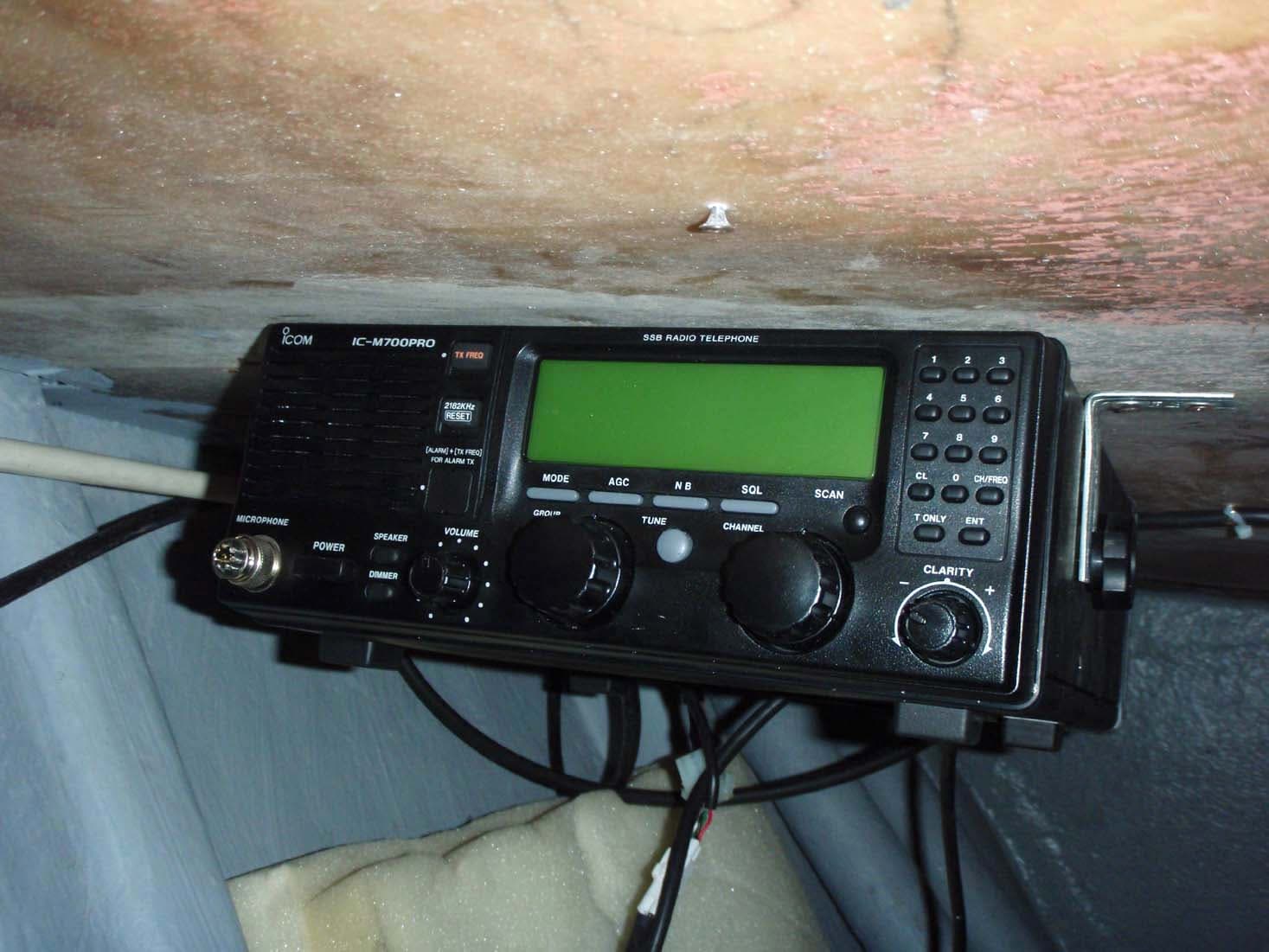
Photo: Icom IC-M700PRO marine radio by Petty Officer 1st Class Nico Figueroa, United States Coast Guard. Licensed under Public domain. Source on Wikimedia Commons. Also listed on the AM Wholesale image credits page.
Australian Marine Wholesale’s archived catalogue put Icom next to the plotters because a helm without a radio is a helm that can only talk to itself. VHF is still the legal, line-of-sight language of Australian water. DSC (Digital Selective Calling) is the button that sends a formatted distress with your identity and, if the radio has GPS, your position.
This is a licensing and installation piece, not a brand bake-off.
The qualification
ACMA regulates marine radio. If you transmit on VHF, you need the operator qualification that matches the set — for most recreational skippers, the VHF certificate. Clubs and some TAFE-style providers still run the course. The certificate is about distress procedure, channels and not occupying 16 with a chat.
State marine licences and ACMA radio certificates are different tickets. One does not replace the other.
Channels you will actually use
- 16: distress, safety, calling. Then move.
- 67: weather and some safety broadcasts, depending on the coast.
- Working channels: 72, 73 and the marina or race channels you are told to use.
- DSC distress: the red button, not a substitute for voice on 16 once you can speak.
Learn the difference between a Mayday, a Pan-Pan and a Securité before you need them. The editorial standards exist so we do not pretend this page is a course.
DSC and GPS
A DSC radio that does not know where it is can still send a distress identity. A DSC radio that shares a GNSS sentence over NMEA 2000 can send a position. That is the installation. Do not leave the GPS input “until next week”.
Program the MMSI carefully. An MMSI that belongs to the previous owner is how rescue starts in the wrong boat.
Handhelds, splitters and AIS
A handheld in a floating bag is the second radio. It is not the first. If you also have AIS, do not casually tee both transmitters onto one whip without a splitter that is rated for transmit. A cheap splitter is two weak devices.
Installation manners
A proper masthead or arch antenna, coax that is not crushed in a hatch, a fused feed, and a handset you can reach with a lifejacket on. Test DSC (the non-distress test procedure) after installation. Then use 16 like an adult.
Pair this page with EPIRB versus PLB. The radio is how you talk. The beacon is how you are found when the radio cannot.
Frequently asked questions
- Do I need a certificate to carry a VHF on a 6-metre trailer boat?
- If the radio transmits, ACMA expects the operator to hold the appropriate qualification — typically the Marine Radio Operator’s VHF Certificate of Proficiency (or the older equivalents still recognised). A receive-only scanner is a different object.
- What is an MMSI and who issues it?
- A Maritime Mobile Service Identity is the nine-digit number DSC uses to say who you are. In Australia it is obtained through the ACMA process tied to your vessel and certificate. Program it once, correctly, and do not invent one.
- Can I use a handheld instead of a fixed set?
- A handheld is a brilliant backup and a tender radio. A fixed 25-watt set with a real antenna is what other vessels and coast stations hear when it matters. Carry both if you leave the Broadwater.