Navigation and radar · 11 min read · Updated 2026-09-09
AIS Class A vs Class B for Australian waters
Class B is what most recreational cruisers need. Class A is a workplace. The expensive mistake is buying a receiver and thinking you are visible.
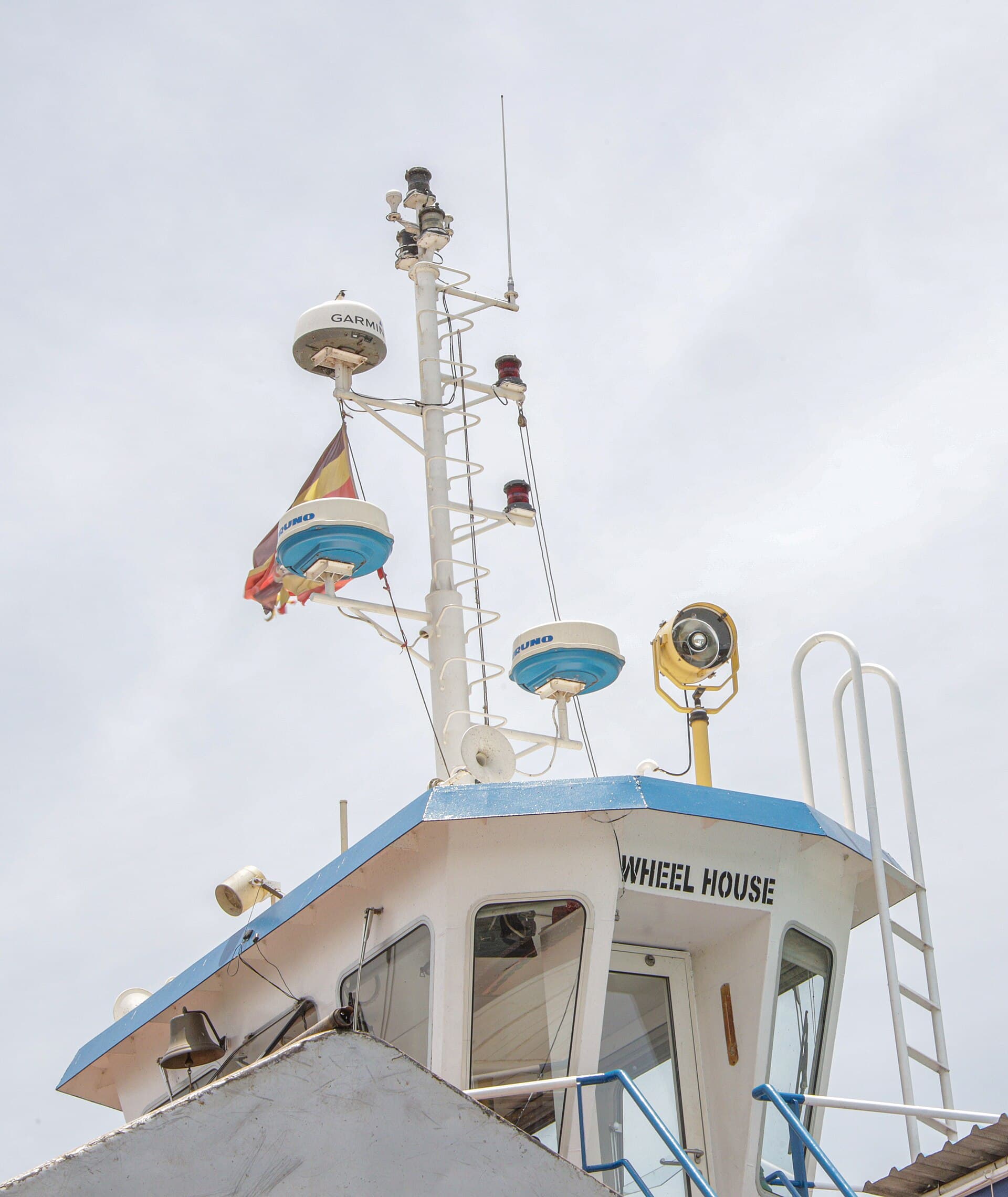
Photo: Wheelhouse roof with Garmin radar and communication gear by Ssemmanda will. Licensed under CC BY-SA 4.0. Source on Wikimedia Commons. Also listed on the AM Wholesale image credits page.
AIS is a VHF data broadcast of identity, position, course and speed. Class A is the SOLAS / commercial set: higher power, more sentences, guaranteed slot. Class B is the recreational and light-commercial set: lower power, fewer mandatory fields, cheaper, and entirely adequate for most Australian cruisers.
The old wholesale desk sold Digital Yacht and the big four plotter families because AIS is a network device, not a gadget. It needs a GPS source, a VHF antenna plan, an MMSI, and an MFD that will overlay targets without lying about heading.
Class A, in Australian practice
Class A belongs on vessels that already live under a commercial safety system: charter, workboats, some large motor yachts that choose to behave like ships. You get 12.5 W, more frequent position reports, and the ability to send safety messages the way a bridge team expects.
You also get cost, power draw and a configuration job that should be done by someone who has done it before. If a salesperson is pushing Class A onto a 34-foot family cruiser “for safety”, ask what problem Class B failed to solve.
Class B, including “B+” / SOTDMA units
Modern Class B units that use SOTDMA (often marketed as B+ or similar) behave more like Class A in busy AIS traffic. On Sydney Harbour at 17:00 or the Brisbane River on a weekend, that extra politeness in the slot map is worth having.
Standard CSTDMA Class B still works on the Queensland coast. It is not obsolete. It is just more likely to wait for a gap.
Receivers are not transponders
USB dongles and receive-only boxes are excellent for a desktop or a racing navigator who already has a transmitter elsewhere. They are a false economy on a cruising helm. The ship you are worried about already has AIS. The question is whether you are on their screen.
Installation notes that Australian yards still get called back for
- Share the GPS with the radio and the plotter over NMEA 2000, or give the AIS its own GNSS and stop arguing about which position is true.
- Do not tee the AIS onto the same VHF whip as the voice radio without a proper splitter that is rated for the job. A cheap splitter is how you own two weak devices.
- Program the MMSI once, correctly, and write it down. An MMSI that belongs to the previous owner is a regulatory mess, not a software glitch.
- Overlay needs heading. Without a heading sensor the triangle will skate.
Pair this piece with marine radar, dome versus open array and VHF licences and DSC. AIS does not replace a radio or a lookout. It is the polite sentence you add to both.
Frequently asked questions
- Do I have to carry AIS on a recreational yacht in Australia?
- Recreational vessels are not generally forced onto AIS the way SOLAS ships are. AMSA and state agencies still expect you to keep a proper lookout. If you cruise at night, share Moreton Bay or Sydney Harbour with ships, or take paying guests, a Class B transponder is the practical minimum.
- Will a Class B transponder show me on a ship’s radar?
- It will show you on a ship’s AIS display, not on the radar sweep. Radar and AIS are different sensors. Buy both if you run shipping channels in the dark. See the radar guide.
- Is a receive-only AIS dongle enough?
- It helps you see other people. It does nothing for the bulk carrier that cannot see you. If the point of the purchase is “do not get run down”, you need to transmit.