Navigation and radar · 11 min read · Updated 2026-09-11
GPS plotter installation mistakes that still cost Australian skippers
Most “faulty plotters” are antenna, ground, power and heading problems. This is the punch-list Coomera techs walk before they blame the glass.
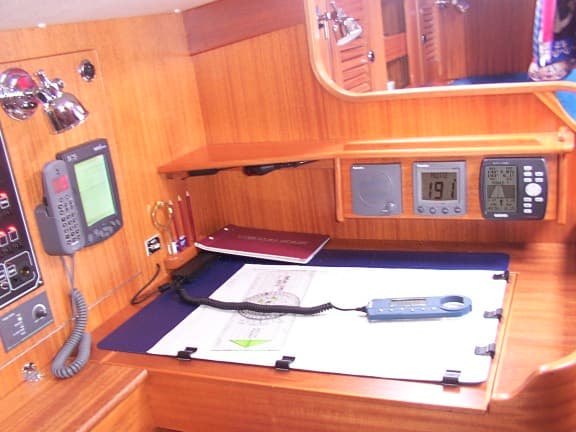
Photo: Chart table on a Hallberg-Rassy 36 with GPS, NMEA instruments and DSC VHF by Pete Verdon. Licensed under CC BY-SA 3.0. Source on Wikimedia Commons. Also listed on the AM Wholesale image credits page.
A plotter that reboots on start-up, paints the boat on the golf course, or overlays AIS two lengths late is usually installed, not manufactured, into that state. The archived AM Wholesale site sold plotters beside installation and commissioning for a reason. This is the short list of mistakes that still generate callbacks.
Antenna in the shade
Built-in GNSS receivers are a gift on an open helm. They are a trap under carbon hardtops, aluminium arches and a pile of solar. Put a dedicated antenna on the cabin top or arch, clear of radar and satcom, and tell the MFD to use that source over NMEA 2000.
No heading sensor
GPS can tell you where the boat has been moving. It cannot tell you where the bow is pointing while you sit on a tide. Radar overlay, AIS triangles and “north-up that looks drunk” are heading problems. Fit a compass. Calibrate it.
Shared, skinny or dirty power
Voltage sag at cranking, an unfused spur from the radio, and a ground that shares a windlass are classic. Navigation glass belongs on a clean, fused house or instrument bus. If the boat still has one battery, read dual-battery systems before you add another display.
NMEA as a star, not a backbone
Random tees behind the helm, missing terminators, and 0183 wires twisted “because they are both NMEA” produce ghost devices and silent autopilots. Lay a backbone. Terminate both ends. Insert power once.
Chart cards that expire in silence
A beautiful MFD on a 2019 card is how people discover a new beacon the hard way. Put renewals on a calendar with the EPIRB and the life raft. See Navionics versus C-MAP.
Brightness, night and the rest of the helm
A plotter that cannot dim will wreck night vision on a Seaway exit. A plotter that sits in specular sun will be unreadable at noon. Test both. Then make sure the navigation lights and the VHF still work when the MFD is off — because one day it will be.
If you are scoping a whole cruiser, use the 30- to 50-foot package planner so the plotter is the last box, not the first.
Frequently asked questions
- Why does my plotter lose GPS under the hardtop?
- Because the antenna is under the hardtop. External GNSS wants sky. A display with a built-in receiver is fine on an open centre console and poor under carbon, aluminium or a wet bimini stacked with solar.
- The overlay does not match the boat. Is the chart wrong?
- Usually the heading sensor is uncalibrated, missing, or sitting next to a speaker. Fix heading before you file a chart complaint.
- Can I power the plotter from the radio circuit?
- You can. You should not. Give navigation glass a fused, dedicated feed from the instrument or house bus so a radio fault does not take the helm with it.