Marine lighting · 11 min read · Updated 2026-09-04
Underwater boat lights in Australia — colour, lumens and the rules
Blue transom glow is a Gold Coast cliché. The useful questions are hull penetration, colour law, draw on a 12-volt bank, and whether you are lighting fish or confusing a skipper.
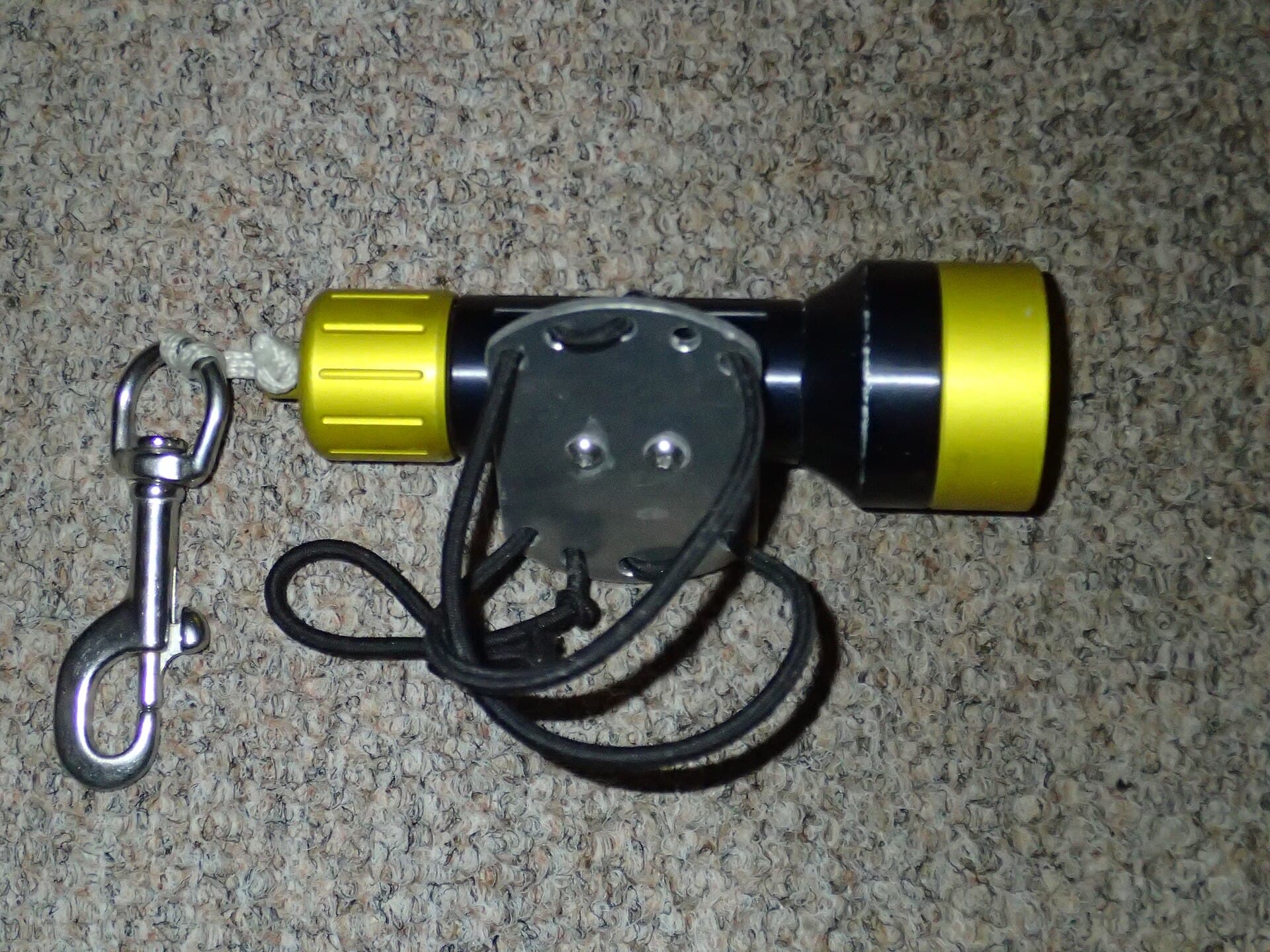
Photo: LED dive light on a bungee hand-mount by Peter Southwood. Licensed under CC BY-SA 4.0. Source on Wikimedia Commons. Also listed on the AM Wholesale image credits page.
The archived AM Wholesale lighting desk put Lumitec and Aqualuma in the window for a reason. Underwater LEDs are the product that photographs well and leaks, fuses or blinds someone when they are specified as jewellery. This guide is the Australian version of that conversation.
What the light is for
Be honest. Show lighting (the transom glow at Dockside) is a colour and a lumen choice. Work lighting (inspecting a prop, watching a swimmer, night snorkel) is a beam and a switch. Fishing lighting is a theory about colour and plankton that works until it does not. Buy for the first job. The other two are bonuses.
If you actually need to see under the boat, a handheld dive light still wins. The photo on this page is that tool, not a hull fitting — and that is the point.
Colour
White is brightest and most honest. Blue photographs better and is the Gold Coast default. Green is the fishing-forum favourite. RGB and “4-colour” Lumitec-style fittings exist because owners want all three without another hole.
What you must not do is imitate emergency or enforcement lighting. Flashing blue is not a personality. Keep decorative wash steady, and keep COLREGs navigation lights as the only lights that say who you are in a channel.
Lumens, pairs and 12 volts
Manufacturers quote lumens the way stereo shops quote watts. Treat the number as a class, not a promise. Compact “mini” pairs in the hundreds of lumens suit tenders and 6-metre boats. Mid-size fittings in the low thousands suit a 30-foot transom. Anything that sounds like a nightclub wants a house bank, proper cable and a switch that is not on the same fuse as the plotter.
Read marine LED lighting for trailer boats if the boat lives on a highway, and onboard power if you are adding a row of them to a cruiser.
Holes, bonding and the hardstand
Through-hull lights are through-hull fittings. They need bedding, bonding where the hull system requires it, and an inspection every time the boat comes out. Transom-mount and bracket lights are the grown-up choice on trailer boats that live in a driveway.
IP67 on the fixture does not make the cable entry immortal. Strain-relieve the lead. Fuse it. Do not share a circuit with navigation lights.
Where this sits on the old wholesale list
Lumitec SeaBlaze-class fittings and Aqualuma arrays were the SKUs the Coomera desk actually moved. The brand on the bezel matters less than the sealing, the warranty, and whether the Australian importer will still answer. For the rest of the lighting job — courtesy, spreader, flood — continue through the marine lighting hub.
Frequently asked questions
- Are blue underwater lights legal in Queensland?
- Decorative underwater lights are widely used, but flashing blue is associated with enforcement vessels in several jurisdictions. Keep underwater wash steady, keep navigation lights legal, and do not imitate emergency lighting. If a state marine officer tells you to switch them off in a channel, switch them off.
- How many lumens do I need on a 7-metre trailer boat?
- A matched pair of compact LEDs in the 700 to 1,500 lumen class is plenty for a transom photo and a bit of bait. More lumens is a 12-volt and a hole-in-the-hull conversation, not a personality test.
- Should I drill the hull or use transom-mount lights?
- Trailer boats should default to transom-mount or bracket fittings. Through-hull underwater lights belong on a cruiser with a yard that will bed them properly and a owner who will inspect them every hardstand.