Onboard power · 12 min read · Updated 2026-09-20
Lithium vs AGM marine batteries for Australian boats
Lithium wins on usable capacity and weight. AGM still wins on simplicity and heat-tolerant manners. The wrong drop-in is how you cook an alternator.
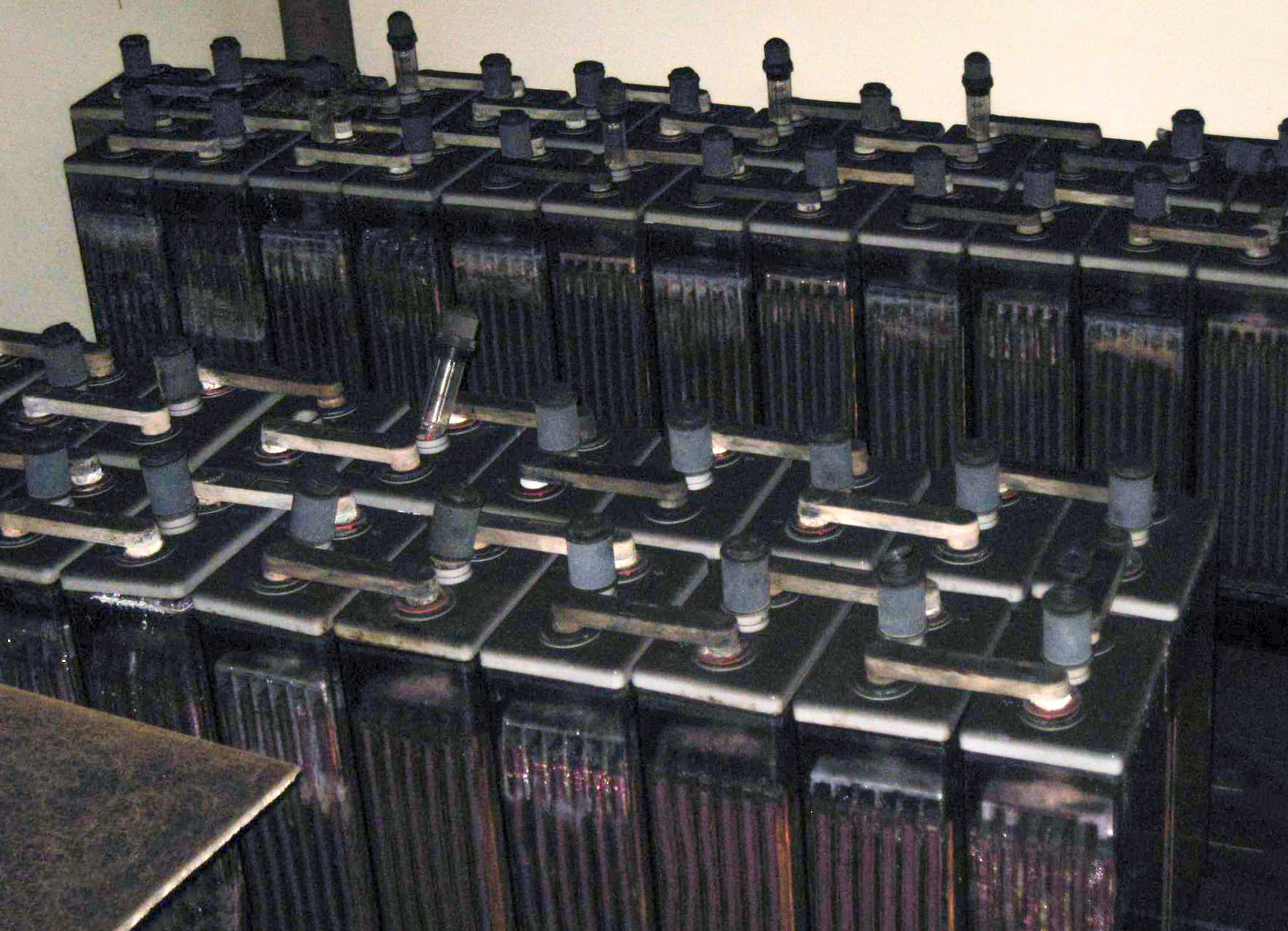
Photo: Lead-acid accumulators by Pseudoznanstvenik. Licensed under CC BY-SA 3.0. Source on Wikimedia Commons. Also listed on the AM Wholesale image credits page.
Australian Facebook groups treat lithium as a moral victory. Yards treat it as a system. AGM is still the correct house battery on a lot of trailer boats and lightly used cruisers. Lithium (almost always LiFePO4 in this trade) is the correct house battery when you cycle daily, care about weight, and will pay for the charger and alternator protection that keep it polite.
The old wholesale list sold Federal and other flooded or AGM banks beside Victron chargers. The chemistry has moved. The need for a designed pair has not.
AGM, when it is still right
- You want a battery that a generic three-stage charger understands.
- The boat sits on a trailer or a marina lead most of the week.
- You will not regularly take more than about 50 percent of the labelled amp-hours.
- You want fewer conversations about BMS, heaters and charge-current limits.
AGM hates being left flat and hates cooking. Queensland heat will shorten it. That is still a known failure, not a mystery.
Lithium, when it is worth it
- You live aboard or cruise for weeks.
- You run an inverter, a watermaker or a serious refrigeration load. See inverter sizing and watermakers.
- You need the weight off the ends of a sailing boat.
- You will specify a charger, a DC-DC or an external regulator, and a monitor that speak the same language. See Victron systems.
Usable capacity is the win. A 200 Ah lithium bank that you can take to 20 percent is a different boat to a 200 Ah AGM you should not take below 50.
The alternator conversation
A lithium bank can ask an alternator for more current than the alternator wanted to give for hours. DC-DC chargers exist because of that. External regulators exist because of that. “The old 80-amp Hitachi will be fine” is how you buy a new alternator on a Sunday in Bundaberg.
Installation manners
Fuse at the battery. Use the cable the current deserves. Secure the case against a knockdown or a highway slam. Keep the BMS comms if the battery has them. Do not parallel random old AGMs with new lithium and invent a chemistry.
Trailer boats can get most of the benefit from a small lithium house and a DC-DC, with the cranking battery left as lead. That hybrid is covered in dual-battery systems.
Frequently asked questions
- Can I drop lithium in place of my AGMs and keep the same charger?
- Only if that charger has a lithium profile that matches the BMS, and the alternator is protected. “Drop-in” is a sales sentence. Treat chemistry changes as a system change.
- Is lithium safe in a Queensland engine room?
- LiFePO4 is stable chemistry compared with older lithium-ion stories, but it still wants ventilation, a BMS, correct fusing and a temperature window. Do not sit a battery against a turbo and call it marine.
- How much more usable energy do I get?
- Roughly twice the usable amp-hours from the same labelled capacity, because you can discharge lithium much deeper than you should discharge AGM. That is the real win, not the brochure watt-hour.